A concrete pad is the most solid, long-lasting base for a shed, carport or equipment, but it needs planning before you order the building or book the pour. Getting the base, size, drainage and anchoring right up front prevents doors that stick, frames that rack and water pooling underneath. This guide answers the questions South Georgia property owners ask most often.
Do You Need a Concrete Pad for a Shed?
Not every shed needs one, but many benefit from it. A concrete pad is the strongest and most permanent option. It keeps the floor of the building off the ground, resists moisture and pests, and gives you a level surface that will not shift as the soil gets wet and dries out.
A pad makes the most sense when:
- The building is large or heavy, such as a workshop or storage building
- You plan to park a mower, ATV, truck or equipment inside
- The shed has no floor of its own, or you want a concrete floor instead of wood
- You want the building to stay square and level for the long term
For a small, light shed with a built-in wood floor, some owners choose a gravel base instead. The right choice depends on the building, how you will use it and the ground it sits on.
Concrete Pad or Gravel Base?
A compacted gravel base is a common alternative and works well under some prefab sheds. It drains well and is quicker to prepare. A concrete pad costs more up front but gives you a solid floor, better resistance to moisture and pests, and a surface you can drive or roll heavy equipment onto. Concrete is also the better choice for carports and equipment pads, where the slab itself is the working surface. If you are unsure, check what the shed or carport manufacturer recommends, then talk it through with a contractor who can look at your site.
How Thick Should the Pad Be?
This is one of the most common questions, and the honest answer is that it depends on the load. A pad for a small garden shed carries far less than one under a workshop where you will park a truck or run heavy tools. Carport and building kits often come with foundation drawings that set the size, thickness and any thickened edges or anchor locations. When there are drawings, we pour to them. When there are not, we look at what the pad will carry and the soil underneath before recommending what it needs.
For a technical overview of why the base, thickness and joints all matter, the American Concrete Institute's guide to concrete slabs on ground is a useful reference.
What Affects the Cost of a Concrete Pad?
Every pad is priced on its own job. The main factors are:
- The size of the pad and how much concrete it takes
- Site preparation, such as clearing, leveling and compacting the ground
- Access for the concrete truck, or whether the concrete has to be moved further
- Reinforcement and any thickened edges the building requires
- The finish, from a basic broom finish to a smooth troweled floor
The quickest way to get a real number is to share the size and use of the building and let a contractor look at the site and give you an estimate.
What Goes Into Pouring a Pad
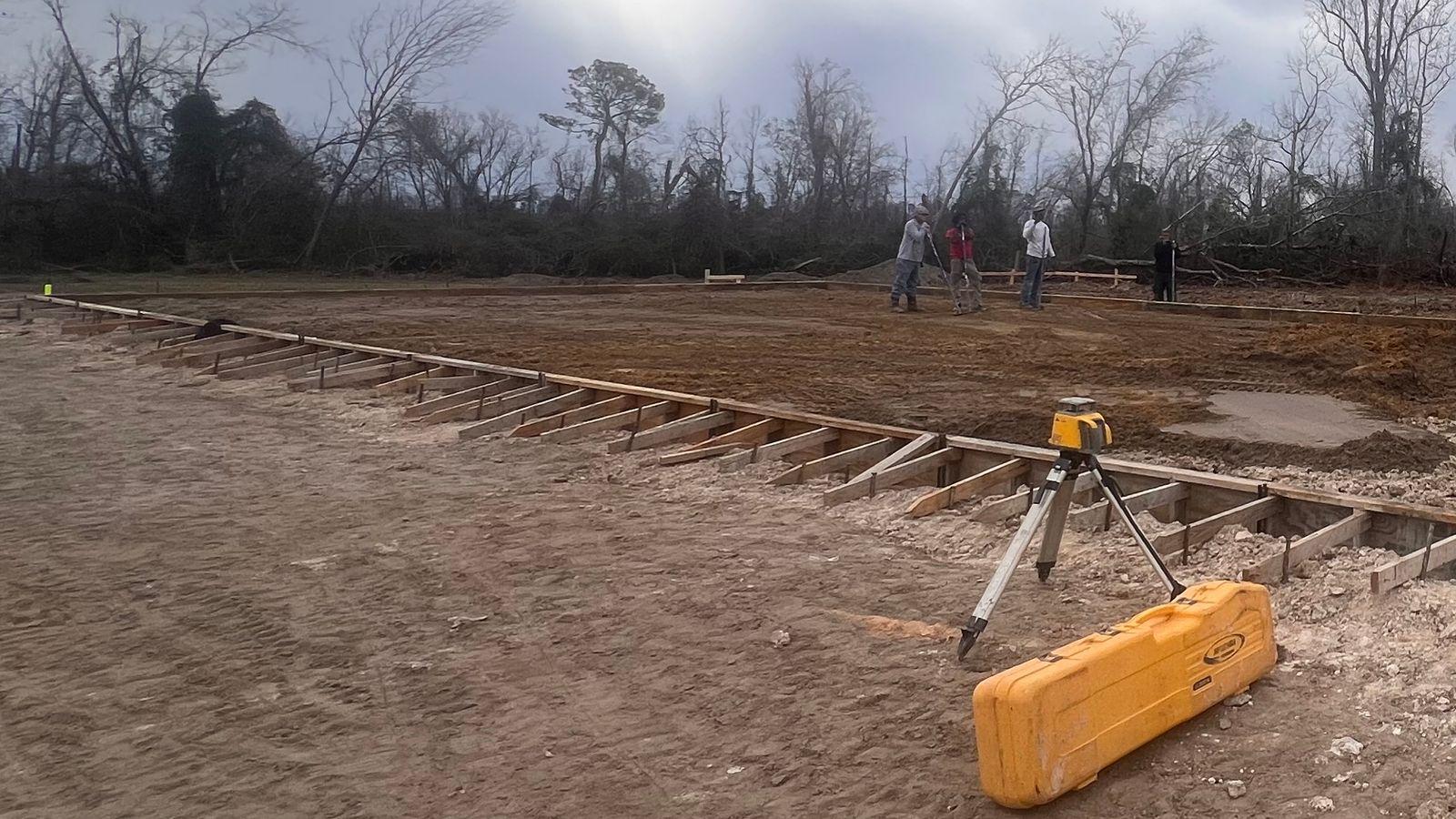
A pad that lasts starts well before the concrete arrives. The ground is cleared and leveled, soft spots are dealt with, and the base is compacted so the slab will not settle. Forms are set to the exact size and layout of the building, and reinforcement is placed where the job calls for it. The concrete is then placed, leveled and finished to suit how the surface will be used, and it is protected while it cures. The National Ready Mixed Concrete Association's guidance on curing concrete explains why that last step matters.
Most problems with pads, such as cracking, settling or water running toward the building, trace back to the ground underneath rather than the concrete itself. That is why site preparation and grading matter as much as the pour. The NRMCA's Concrete in Practice series covers many of these issues in plain terms.
Anchoring a Shed or Carport to the Pad
Sheds and carports need to be secured to the slab, especially in an area that sees strong summer storms. The building manufacturer usually specifies how and where it should be anchored, whether with anchor bolts set into the concrete during the pour or with anchors fastened into the finished slab. Share those instructions before the pour, so any embedded anchors can be placed in the right spots and you are not drilling around them later.
Pads for Carports, Generators and Equipment
Concrete pads are not just for sheds. Carports, standby generators, HVAC units, tool stations and heavy equipment all benefit from a solid, level base. Carports in particular depend on secure anchoring and good drainage, because the slab is also the surface you drive on, and it often ties into the driveway. For larger shops, barns and metal buildings, the same planning applies on a bigger scale.
Planning Your Pad in South Georgia
A few local points are worth thinking about before you start:
- Drainage. Heavy rain is common here, so the pad and the ground around it should be shaped so water runs away from the building, not toward it. For more on managing runoff, see the EPA's Soak Up the Rain guidance.
- Access. Rural lots often need a clear path for the concrete truck, so plan where it will drive and turn.
- Permits. Requirements for sheds, carports and slabs vary by county and by the size of the building. Georgia's construction codes are enforced locally, so check with your county building or planning office before the project starts.
Get Help Planning Your Concrete Pad
Taylor Concrete LLC pours concrete slabs and pads for sheds, carports, shops and equipment across South Georgia, and our grading crew can prepare the site before the pour. If you are planning a new building, call us and we will help you work out what the pad needs.