
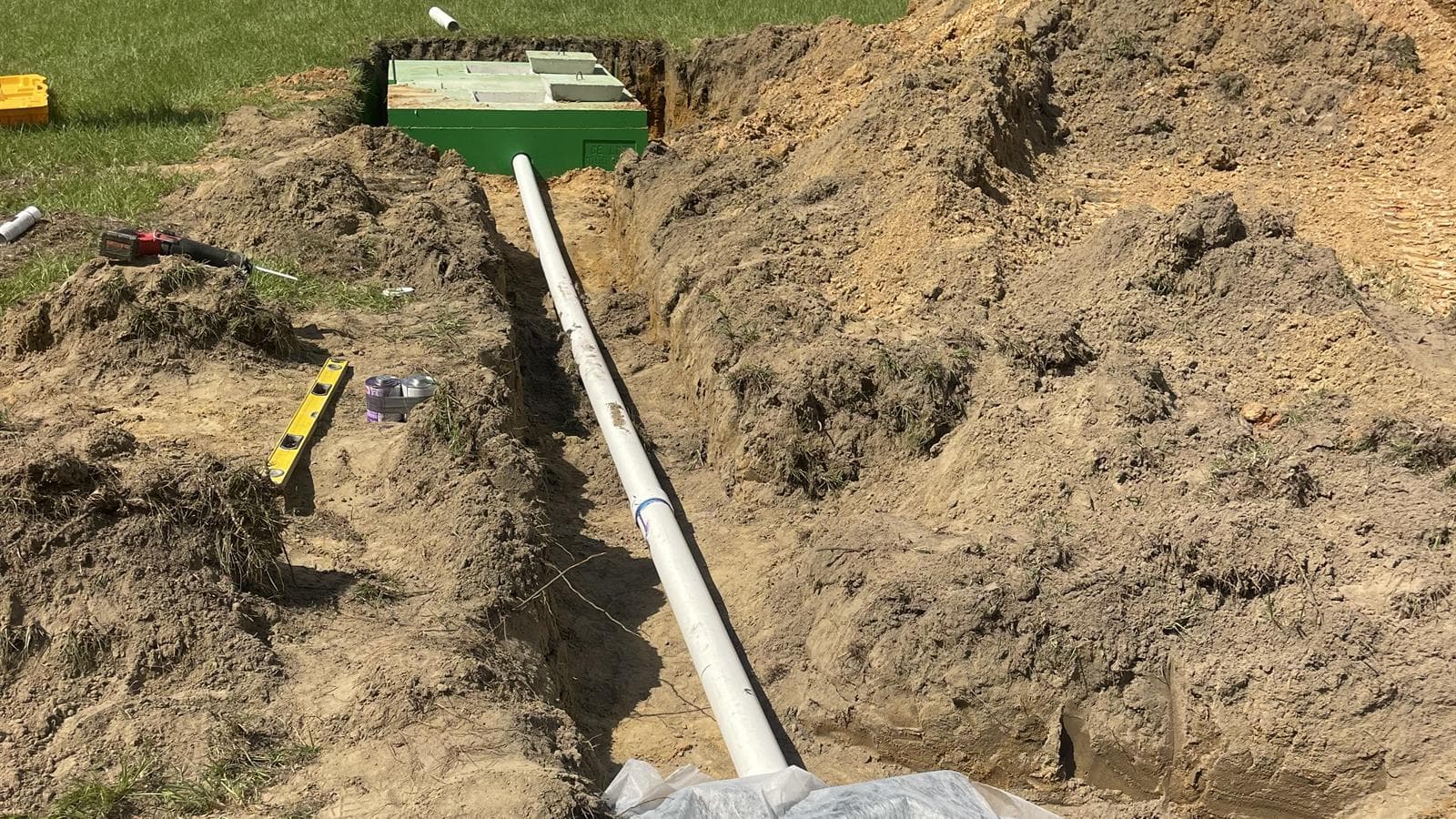
If your home or farm is not on a city sewer line, every sink, shower, toilet and washing machine on the property drains to a septic system buried in your yard. Most people never think about it until something goes wrong. Knowing how the system works makes it much easier to look after, to spot early warning signs, and to understand what a technician is telling you when they come out.
What a Septic System Does
A septic system is a small wastewater treatment system that sits on your own land. Its job is to separate solids from liquid, hold the solids so they can be pumped out, and send the liquid into the soil, where it is filtered and treated naturally before it reaches groundwater.
Across rural South Georgia, septic systems are the standard for farmhouses, homes on larger lots, churches, shops and many small businesses. A well-kept system works quietly in the background. A neglected one can back up into the house or surface in the yard.
The Four Main Parts of a Conventional System
According to the U.S. Environmental Protection Agency, a typical conventional system has four working parts.
The Main Drain Pipe
All of the wastewater from the house leaves through one main pipe that runs underground to the septic tank. If this line is cracked, crushed or blocked by roots, drains inside the house slow down long before the tank itself has a problem.
The Septic Tank
The tank is a buried, watertight container. Inside it, wastewater separates into three layers:
- Sludge: heavy solids that sink to the bottom.
- Scum: grease, oils and light material that float to the top.
- Effluent: the liquid layer in the middle.
Baffles or tees at the inlet and outlet keep sludge and scum inside the tank while the effluent flows out. Bacteria in the tank break down part of the solid material, but they cannot break it all down. That is why the tank has to be pumped out from time to time. The University of Georgia Cooperative Extension guide to septic systems explains this in more detail and is a good reference for any Georgia homeowner.
The Drain Field
From the tank, effluent travels into the drain field, sometimes called a leach field. This is a series of buried pipes or chambers laid in shallow trenches. The effluent seeps out of the pipes and into the surrounding soil.
Drain field problems tend to be the most serious, because once the soil around the pipes is clogged with solids it cannot simply be pumped clear. The drain field depends on unsaturated soil and good air flow, which is why heavy loads, standing water and tree roots all cause problems.
The Soil
The soil is the final treatment step. As effluent moves down through it, the soil filters out bacteria, viruses and nutrients. By the time the water reaches the groundwater, it has been treated by the natural processes in the ground. This is also why the condition of the soil around your drain field matters so much.
How Wastewater Moves Through the System
Put together, the process runs in one direction:
- Water leaves the house through the main drain pipe.
- It enters the septic tank, where solids settle and grease floats.
- The middle layer of liquid flows out to the drain field.
- The liquid soaks into the soil, where it is filtered and treated.
Some properties have alternative systems with pumps, alarms or treatment units because of the soil, the slope or the size of the lot. These work on the same basic idea but have mechanical parts that need more attention. If you are not sure what kind of system you have, a septic professional can tell you during a service visit.
Why Georgia Systems Fall Under Public Health Rules
In Georgia, septic systems are regulated through the Georgia Department of Public Health, which sets the rules for on-site sewage management and certifies installers and pumpers. The UGA Extension guide notes that county health departments inspect new installations and repairs, and may hold records or maps of an existing system on your property. If you have just bought a rural property and do not know where the tank is, the county health department is a good place to start, and a septic company can locate the access lids for you.
Signs Your Septic System Needs Attention
Because the system is underground, the first signs of trouble usually show up inside the house or on the surface of the yard. The EPA's frequent questions on septic systems lists common warning signs, including:
- Slow drains in sinks, tubs and showers.
- Gurgling sounds in the plumbing.
- Sewage backing up into toilets or drains.
- Sewage odors near the tank or drain field.
- Wet, spongy ground or standing water over the system.
- Bright green grass over the drain field when the rest of the yard is dry.
Any of these is a reason to call a professional rather than wait. A full tank is often solved with pumping, but a damaged baffle or a failing drain field needs a proper repair. Do not open a septic tank yourself. The gases inside are dangerous, and an open tank is a serious fall hazard.
Keeping Your System Working
A septic system that is understood is far easier to protect. Regular pumping, sensible water use, and keeping vehicles and tree roots away from the drain field go a long way. Being careful about what goes down the drains matters just as much, because grease, wipes and chemicals are some of the most common causes of clogs and early failure.
If it has been a while since your tank was serviced, or you do not know when it was last pumped, book a septic tank pumping visit. If you are already seeing warning signs, our septic installation and repair service covers diagnosis and repair of tanks, lines and drain fields. Taylor Concrete LLC serves homes, farms and businesses across our South Georgia service areas, and you can contact our team to talk through what your system needs.