
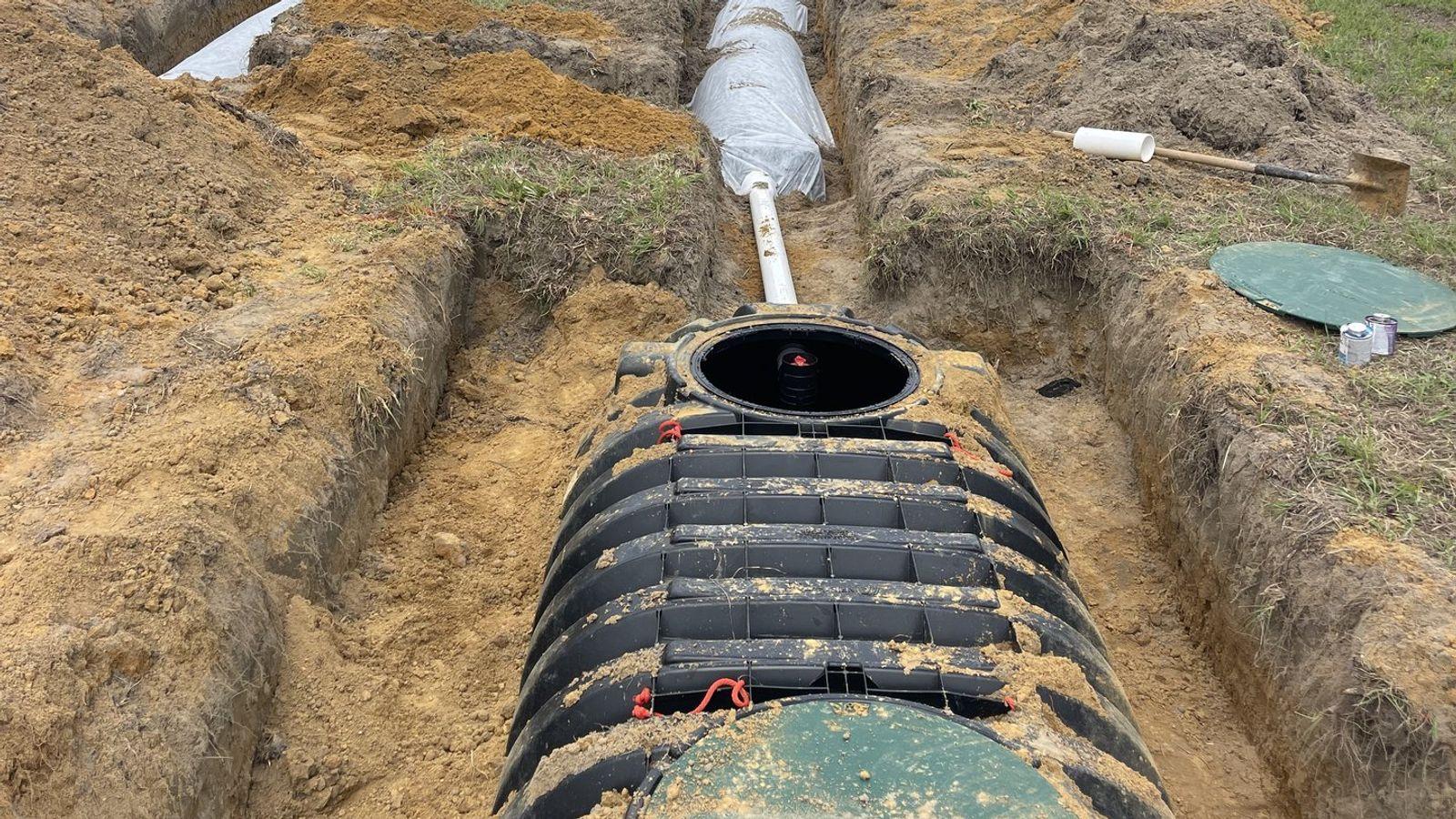
If your septic system backs up, stop using water in the house right away, keep everyone away from the sewage, do not open the septic tank, and call a septic professional. Those steps limit the damage and keep your family safe while the cause is found. Below, we explain how to tell a backup is happening, what usually causes it, and how to stop it happening again.
Signs Your Septic System Is Backing Up
The clearest sign is sewage or dirty water coming up through the lowest drains in the house, such as a shower, tub or floor drain. Other warning signs include:
- Several drains running slowly at the same time
- Gurgling sounds from drains or toilets
- Toilets that flush slowly or not at all
- Sewage odors inside the house or around the tank
- Soggy ground or standing water over the tank or drain field
If only one sink or toilet is slow, the problem may be a clog in that fixture's line. When several drains act up together, the problem is usually further down the system.
What to Do Right Away
Act quickly to limit the mess and keep people safe:
- Stop using water. Hold off on laundry, the dishwasher, showers and flushing.
- Keep children and pets away from any sewage and from wet areas in the yard.
- Never open or climb into a septic tank. The gases inside can be dangerous.
- Skip chemical drain cleaners. They will not fix the cause, and harsh chemicals can harm the bacteria your tank relies on.
- Call a septic professional, and note when the problem started and anything that changed around that time.
Can You Shower or Flush During a Backup?
No, not until the problem is fixed. Any water you send down the drain has nowhere to go and can push more sewage back into the house. Wait until the system has been checked before using showers, toilets, the washing machine or the dishwasher.
Is a Sewage Backup Dangerous?
It can be. Raw sewage can carry germs that cause illness, so treat any backup as a health hazard. Avoid touching it, keep children and pets out of the area, and wash your hands well if you do come into contact with it. The Massachusetts Department of Environmental Protection's home care guide for sewage backups covers safe cleanup in more detail. For a large backup inside the home, professional cleanup is often the safer choice, and anyone who feels unwell after contact with sewage should speak to a doctor.
Why Septic Systems Back Up
Most backups come down to one of a few causes:
- A tank that is overdue for pumping, so solids block the outlet or move toward the drain field
- A blocked pipe between the house and the tank, often from wipes, grease or roots
- A damaged or blocked component inside the tank
- A drain field that is saturated, clogged or failing
- Heavy rain that leaves the ground too wet to absorb water
- Too much water entering the system at once
Many backups start with what goes down the drain. Our guide to what not to flush or pour down the drain covers the items that cause the most trouble.
Why It Keeps Happening, Even After Pumping
If a backup comes back after the tank was pumped, the tank usually was not the real problem. Pumping removes what is in the tank, but it does not clear a blocked line, fix a broken component or bring a failing drain field back to life. A backup that keeps returning is a sign the whole system needs an inspection. If the drain field needs work, your county environmental health office, which oversees septic systems under the Georgia Department of Public Health, may need to be involved.
Will Pumping Fix a Backup?
Sometimes. If the tank is simply full, septic tank pumping resolves it. If the cause is in the lines or the drain field, pumping gives temporary relief, but the fault still needs repair.
How to Stop It Happening Again
A few habits go a long way toward preventing the next backup:
- Have the tank pumped regularly so solids never reach the drain field
- Flush only toilet paper, and keep grease and food scraps out of the sink
- Spread laundry loads out instead of running several in one day
- Fix leaking toilets and faucets promptly
- Keep vehicles and heavy equipment off the tank and drain field
- Direct gutters and runoff away from the drain field
Our septic system care tips go into more detail, and the EPA's answers to frequently asked septic questions are a helpful reference.
Get Help With a Septic Backup in South Georgia
Taylor Concrete LLC finds the cause of septic backups and repairs tanks, lines and drain fields for homes, farms and businesses across South Georgia. If your system is backing up, call us and we will help you work out what is wrong and what it will take to fix it.