
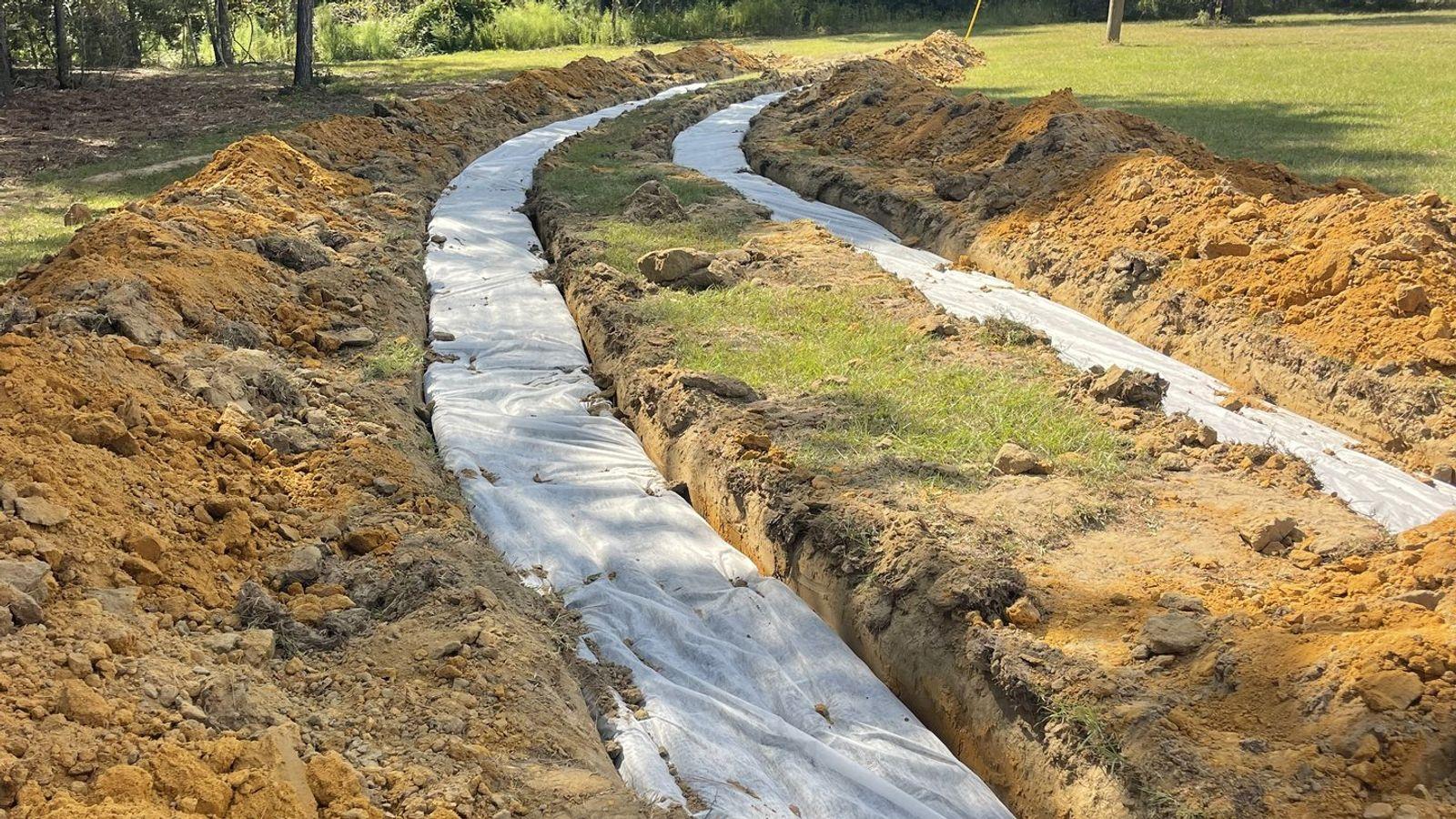
Plan the septic system as early as you plan the house. On a new build, the county has to approve where the system goes and what type of system the soil can support, and that decision affects where the house, driveway and outbuildings can go. The best time to start is when you are choosing the lot or drawing the site plan, before anything is fixed.
When Should You Plan the Septic on a New Build?
As early as possible, ideally before you buy the land or finalize the house plans. A septic system needs suitable soil and enough space for the tank and drain field, and not every part of a lot will work. If you are buying land, ask whether the lot has already been evaluated for a septic system, and speak to the county before you commit to a layout.
Planning early also avoids expensive surprises later, such as having to move the house, redesign the driveway or switch to a different type of system once construction has started.
Who Approves a New Septic System in Georgia?
Your county environmental health office approves new septic systems, working under the Georgia Department of Public Health onsite sewage program. The county typically looks at the lot and the soil before it issues a permit, and the permit sets out the system the property needs. The installation then has to follow that permit.
Because the septic permit and the building permit are connected, ask your county early how the two fit together for your project.
Choosing Where the System Goes on Your Lot
Where the system sits is decided by the site, the soil and the county's requirements, but a few principles apply to most new builds:
- The drain field needs an area of suitable soil with enough room for the lines
- The system must keep the distances the county requires from wells, water and property lines
- The tank should be reachable for future pumping, with access lids that are not buried under landscaping
- Driveways, parking areas and outbuildings should be planned to stay off the tank and drain field
- Water from gutters and paved areas should be directed away from the drain field
Getting this layout right on paper first is far easier than moving a driveway or a shop later.
What Type of Septic System Will Your Home Need?
The county permit decides, based on the soil, the lot and the size of the home. For many homes, the familiar setup is a conventional system with a septic tank and a drain field. Lots with more difficult soil or site conditions may need a different design. The EPA's overview of the types of septic systems explains the main options in plain terms, and our article on how a septic system works covers what each part does.
How the Septic Fits Into the Build Schedule
On most new builds, the septic is planned at the start and installed once the house location and the plumbing exit point are set. Agree the order of work with your builder and your septic installer so each step happens at the right time.
One point often overlooked is protecting the drain field area during construction. Concrete trucks, delivery trucks and material piles can compact the soil where the drain field will go, which can affect how well it works later. Mark the area off early and keep heavy traffic away from it. Good site preparation and grading at the start makes the whole build easier, from the house slab to the final septic installation.
What Affects the Cost of a New Septic System?
Every system is priced on its own site. The main factors are:
- The type of system the permit requires
- The soil and site conditions on the lot
- The size of the home
- Access for equipment and how much clearing is needed
- The distance between the house and the system
The quickest way to get a real number is to share your lot details and plans so an installer can look at the site and give you an estimate.
How Long Does a New Septic System Last?
A well-designed, properly installed system that is cared for can serve a home for many years. How long it lasts depends on regular pumping, what goes down the drains, and keeping vehicles, roots and runoff away from the drain field. UGA Extension's beginner's guide to septic systems is a helpful introduction for new septic owners, and the EPA's guide to how septic systems work explains the basics of looking after one.
Planning Your New Build With One Local Team
Taylor Concrete LLC handles site work, concrete slabs and septic installation for new homes across South Georgia, so the house pad, the driveway and the septic system can be planned together. If you are planning a new build, call us and we will help you work through what your property needs.